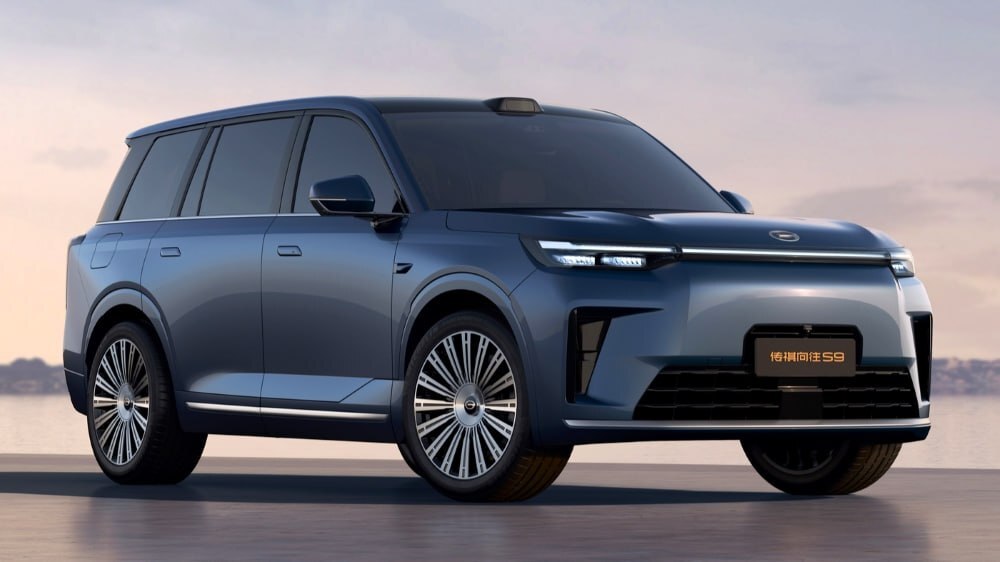
Chinese cars can no longer be called exotic on the German market. Just a few years ago, many buyers were cautious about them. Today, models from BYD, MG, NIO, XPeng, Aiways and other brands are increasingly found in listings, corporate fleets and private recommendations.
With German, Japanese and Korean cars becoming more expensive, many buyers ask a logical question: is it worth considering a Chinese car in Germany, or is it better to choose a more familiar and proven brand?
The short answer: Chinese cars can be attractive in terms of price, equipment and technology, especially in the EV and hybrid segment. However, when buying on the used market, it is important to consider resale value, service availability, spare parts and the condition of the specific vehicle.
Why Chinese Cars Have Become More Popular
The main reason is the price-to-equipment ratio. Many Chinese models offer features as standard that European competitors often include only in expensive packages: 360° cameras, panoramic roof, large display, adaptive cruise control, seat ventilation, modern driver assistance systems and advanced multimedia.
Chinese brands are especially active in the electric vehicle and plug-in hybrid segment. For companies such as BYD, MG, NIO and XPeng, electric platforms, batteries and digital technologies have become strong advantages.
Which Chinese Brands Are Most Common in Germany?
BYD — electric cars and hybrids with modern batteries, good equipment and competitive pricing.
MG — affordable EVs, hybrids and petrol models that attract buyers with price and warranty.
NIO — premium EV segment with advanced technology and a focus on comfort.
XPeng — electric cars with strong digital features, driver assistance systems and modern interfaces.
Aiways and other brands — less common, so they require especially careful inspection before purchase.
Strengths of Chinese Cars
The main advantage is generous equipment at a comparatively attractive price. Buyers often get a modern interior, many electronic systems, appealing design and the feeling of a new-generation vehicle.
Another strong point is electric mobility. Chinese manufacturers are highly competitive in the EV segment, where batteries, software, charging systems and digital ecosystems play a key role.
A third advantage is price. In some cases, a Chinese car offers more options for the same money than Volkswagen, Toyota, Hyundai, Kia, BMW or Mercedes-Benz.
Weaknesses and Real Risks
The main risk is resale value. Chinese cars are still less predictable on the used market than established German, Japanese or Korean brands. After a few years, depreciation may be higher.
The second important factor is service and spare parts. Even if the brand has an official dealer, it is important to know where exactly the car can be serviced, how quickly parts are available and whether independent workshops are willing to work on the specific model.
The third risk is limited long-term mileage statistics. For many German and Japanese models, there is already enough experience to understand how they perform at 150,000–250,000 km. For Chinese cars, especially in Germany, there is still less long-term data.
It is also important to consider the dependence on electronics and software. If there are faults with control units, charging, assistance systems or multimedia, repairs may be more complicated than with more common models.
When Buying a Chinese Car Makes Sense
Buying can be reasonable if the car is clearly cheaper than comparable alternatives, has a transparent service history, an accessible official service center nearby and is in good technical condition.
It can be especially logical to consider a Chinese car if you plan to keep it for a long time, do not rely on quick resale and understand the possible risks regarding future residual value.
When You Should Be Careful
It is better not to rush if the model is rare, the nearest service center is far away, the seller cannot provide proper service history, or there are errors related to electronics, the battery or the charging system.
You should also think twice if a comparable Hyundai, Kia, Toyota, Volkswagen or BMW costs only slightly more but is easier to understand in terms of service, repairs and future resale.
What to Check Before Buying
Before buying a Chinese car in Germany, it is important to check:
• technical condition of the vehicle
• VIN, mileage and service history
• battery condition for EV and hybrid vehicles
• charging system and electronic functions
• fault codes in control units
• body condition after accidents and quality of repairs
• availability of service and spare parts
• real market value and resale potential
Conclusion
Chinese cars in Germany in 2026 are no longer just a cheap alternative. Many models have become modern, well-equipped and technologically advanced. They are especially interesting in the electric and hybrid segment.
However, before buying, it is important to look beyond price and equipment. The decisive factors are the condition of the specific vehicle, service history, service availability, residual value and possible future costs.
If you are considering buying a Chinese car in Germany, a professional pre-purchase inspection is highly recommended. CAR-CHECK24 helps assess the technical condition, vehicle history, battery risks, bodywork, electronics and documents before the deal is completed.
With German, Japanese and Korean cars becoming more expensive, many buyers ask a logical question: is it worth considering a Chinese car in Germany, or is it better to choose a more familiar and proven brand?
The short answer: Chinese cars can be attractive in terms of price, equipment and technology, especially in the EV and hybrid segment. However, when buying on the used market, it is important to consider resale value, service availability, spare parts and the condition of the specific vehicle.
Why Chinese Cars Have Become More Popular
The main reason is the price-to-equipment ratio. Many Chinese models offer features as standard that European competitors often include only in expensive packages: 360° cameras, panoramic roof, large display, adaptive cruise control, seat ventilation, modern driver assistance systems and advanced multimedia.
Chinese brands are especially active in the electric vehicle and plug-in hybrid segment. For companies such as BYD, MG, NIO and XPeng, electric platforms, batteries and digital technologies have become strong advantages.
Which Chinese Brands Are Most Common in Germany?
BYD — electric cars and hybrids with modern batteries, good equipment and competitive pricing.
MG — affordable EVs, hybrids and petrol models that attract buyers with price and warranty.
NIO — premium EV segment with advanced technology and a focus on comfort.
XPeng — electric cars with strong digital features, driver assistance systems and modern interfaces.
Aiways and other brands — less common, so they require especially careful inspection before purchase.
Strengths of Chinese Cars
The main advantage is generous equipment at a comparatively attractive price. Buyers often get a modern interior, many electronic systems, appealing design and the feeling of a new-generation vehicle.
Another strong point is electric mobility. Chinese manufacturers are highly competitive in the EV segment, where batteries, software, charging systems and digital ecosystems play a key role.
A third advantage is price. In some cases, a Chinese car offers more options for the same money than Volkswagen, Toyota, Hyundai, Kia, BMW or Mercedes-Benz.
Weaknesses and Real Risks
The main risk is resale value. Chinese cars are still less predictable on the used market than established German, Japanese or Korean brands. After a few years, depreciation may be higher.
The second important factor is service and spare parts. Even if the brand has an official dealer, it is important to know where exactly the car can be serviced, how quickly parts are available and whether independent workshops are willing to work on the specific model.
The third risk is limited long-term mileage statistics. For many German and Japanese models, there is already enough experience to understand how they perform at 150,000–250,000 km. For Chinese cars, especially in Germany, there is still less long-term data.
It is also important to consider the dependence on electronics and software. If there are faults with control units, charging, assistance systems or multimedia, repairs may be more complicated than with more common models.
When Buying a Chinese Car Makes Sense
Buying can be reasonable if the car is clearly cheaper than comparable alternatives, has a transparent service history, an accessible official service center nearby and is in good technical condition.
It can be especially logical to consider a Chinese car if you plan to keep it for a long time, do not rely on quick resale and understand the possible risks regarding future residual value.
When You Should Be Careful
It is better not to rush if the model is rare, the nearest service center is far away, the seller cannot provide proper service history, or there are errors related to electronics, the battery or the charging system.
You should also think twice if a comparable Hyundai, Kia, Toyota, Volkswagen or BMW costs only slightly more but is easier to understand in terms of service, repairs and future resale.
What to Check Before Buying
Before buying a Chinese car in Germany, it is important to check:
• technical condition of the vehicle
• VIN, mileage and service history
• battery condition for EV and hybrid vehicles
• charging system and electronic functions
• fault codes in control units
• body condition after accidents and quality of repairs
• availability of service and spare parts
• real market value and resale potential
Conclusion
Chinese cars in Germany in 2026 are no longer just a cheap alternative. Many models have become modern, well-equipped and technologically advanced. They are especially interesting in the electric and hybrid segment.
However, before buying, it is important to look beyond price and equipment. The decisive factors are the condition of the specific vehicle, service history, service availability, residual value and possible future costs.
If you are considering buying a Chinese car in Germany, a professional pre-purchase inspection is highly recommended. CAR-CHECK24 helps assess the technical condition, vehicle history, battery risks, bodywork, electronics and documents before the deal is completed.